
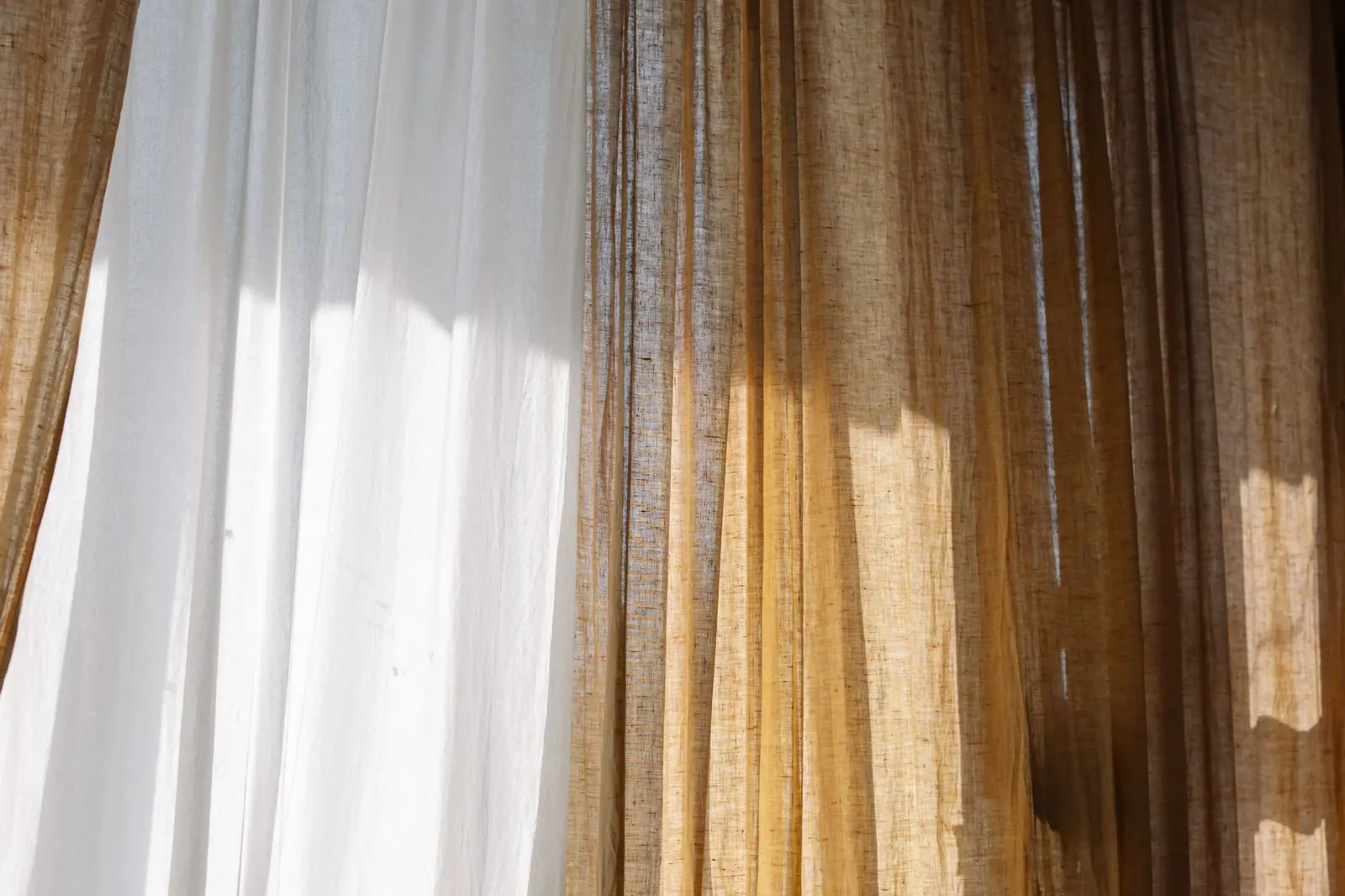
Drapery is what makes a room feel finished. Custom drapes hang at the right height, fall to the right length and have enough fullness to look generous when they’re closed, which is hard to get with ready-made panels sold in three lengths.
What we make
What we make:
- Linen and linen-look drapes, unlined or lined, in soft whites and natural neutrals.
- Sheer curtains that filter light and keep the view.
- Lined and blackout drapes for bedrooms and media rooms.
- Pinch pleat, ripplefold, grommet and rod pocket tops.
- Rods, rings, tracks and finials chosen to suit the room.
- Motorized drapery tracks for tall windows and wide sliding doors.
Layering drapery with shades
Many of our customers pair drapery with a shade underneath: a solar or cellular shade to handle the light every day, and drapes for privacy, softness and color. It’s the most flexible setup for living rooms and primary bedrooms, and it fixes the light gaps you get with drapery alone.
Measured and hung for you
We measure each window, recommend where the rod or track should go, and work out the width and fullness. Our installers mount the hardware level and hang and dress the panels, so the folds fall evenly from the first day.
Frequently asked questions
What is the difference between drapes and curtains?
The words overlap, but drapes usually mean heavier, lined panels that run to the floor, often with pleats at the top. Curtains are usually lighter, unlined and sometimes shorter. Both can be made to measure. We make both, and help you pick based on how much light, privacy and insulation the room needs.
Should curtains touch the floor?
For a finished look, yes. Most people choose panels that just touch the floor or sit half an inch above it, which is easy to live with and simple to clean around. A small break, where the fabric rests an inch or two on the floor, looks softer in formal rooms. Panels that stop several inches short tend to look like they were bought in the wrong size.
How high should curtains be hung?
Hanging the rod or track well above the window, often halfway between the top of the frame and the ceiling or right below the crown molding, makes a window look taller. The rod should also extend past the frame on each side so the open panels stack against the wall instead of over the glass.
Do blackout curtains keep heat out?
They help. A lined blackout panel slows heat coming through the glass, especially when it closes tight to the wall and runs to the floor. On hot west-facing windows the best results come from pairing drapery with a cellular or solar shade underneath.